Patient

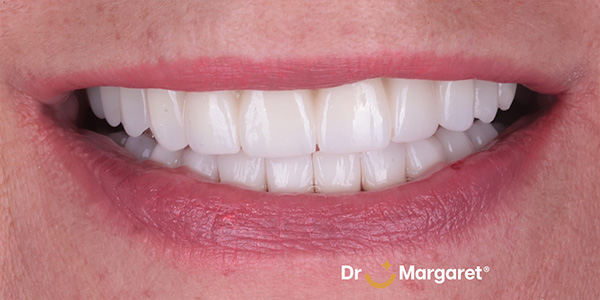
A woman who, for years, lived with a smile that had lost its shape, function, and freshness.

Przed

Po

Problem

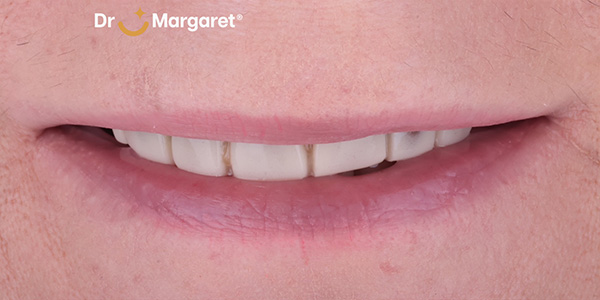
Teeth lacking definition, old discoloured fillings, missing teeth, and loss of function.

Solutions

Full hygiene therapy, digital planning, and comprehensive reconstruction using implants, zirconia crowns, and zirconia bridges.

Before

The accumulation of years of neglect

This is the story of a patient whose smile, over time, stopped fulfilling its most basic role. The teeth did not merely lose their aesthetics — they began to no longer resemble teeth in the classic sense. Old, extensive composite fillings, multiple areas of discolouration, and a lack of clear tooth anatomy made the smile feel heavy and increasingly difficult to accept. The patient avoided smiling openly, being photographed, and speaking with ease. Over time, functional limitations also appeared — eating and everyday comfort were no longer a given. The smile was not only unaesthetic; it became incoherent, unstable, and lacking harmony. It required treatment from the ground up — not another series of temporary adjustments.

Treatment process

This was not about improving a single element, but about restoring meaning to the entire smile. Digital planning made it possible to design teeth with clear form once again — correct proportions and a natural character. Old, discoloured fillings were replaced with restorations that gave the smile a new structure. Implants addressed missing teeth, while zirconia crowns and bridges restored stability, function, and aesthetics. The change was immediate: the smile became brighter, well-proportioned, and visually lighter.

After

From the clinician’s perspective

The most important change took place within the patient herself. Tension disappeared, and ease returned. The smile stopped being something that had to be controlled. Today, the patient enjoys a smile that is healthy, functional, and aesthetically refined — one that restored her confidence, everyday comfort, and joy in simple moments. Because sometimes a true transformation means simply this: teeth once again look and function like teeth — naturally, stably, and without shame.